
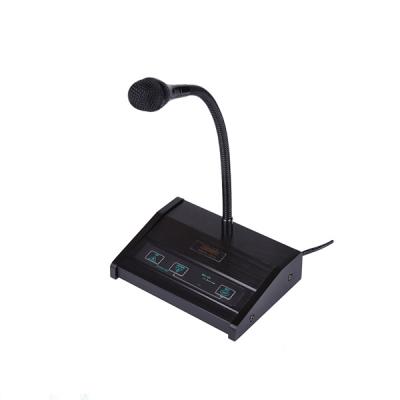
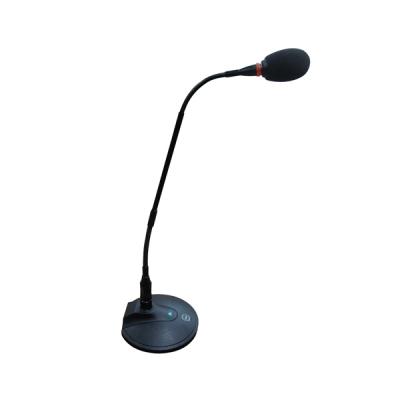
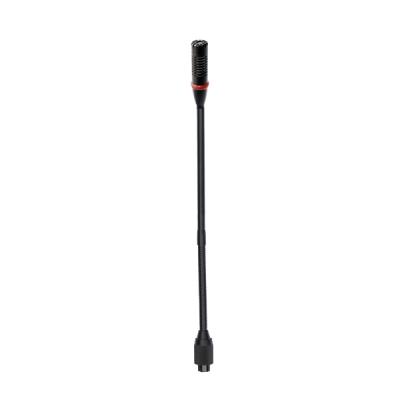

The DSPPA CM30 is a uni-directional desk microphone with a 455mm tube and a die-cast metal base, powered by 48V phantom. It is made for mosque minbars, meeting tables, lecture halls and school broadcast desks where one person speaks from a fixed spot.
====
The DSPPA CM30 is a desktop microphone with a 455mm tube and a die-cast metal base. DSPPA builds it for meetings, lectures, broadcasting and recording, and its uni-directional pickup favors the person speaking in front of it. Put it on a mosque minbar, a chairman's desk or a school broadcast table, and the voice comes through clearly without the whole room bleeding in.
DSPPA CM30 specifications at a glance
These figures come from DSPPA's official product page and datasheet:
- Polar pattern: uni-directional.
- Frequency response: 30Hz to 20kHz.
- Sensitivity: -45dB ±2dB; output impedance: 75Ω.
- Power: 48V phantom from your mixer or amplifier.
- Tube length 455mm, base 115 x 138 x 40mm, net weight 1.1kg.
Built to ignore phone interference
DSPPA designs the CM30 to reject electromagnetic and mobile phone interference. In practice, a speaker can leave a phone on the lectern and you won't hear that familiar buzz through the speakers when a call or message arrives. The uni-directional pickup also helps in busy rooms: it concentrates on sound from the front, so air-conditioning noise and audience movement stay lower in the mix, and feedback is less likely when you turn the system up.
Switch, base and handling
A built-in switch lets the speaker mute and unmute at the desk, and DSPPA adds circuitry that suppresses the pop you often hear when a mic is switched on or off. The shake-proof design reduces the thumps that travel through when someone taps the table. With a metal base and 1.1kg net weight, the mic stays put when you bend the tube toward the speaker, and it comes apart easily if you move it between rooms.
Where the CM30 fits in Saudi Arabia
- Mosques: a fixed mic for the khateeb on the minbar or the imam at the mihrab, wired to the mosque amplifier.
- Corporate and government meeting rooms: a chairman or keynote microphone.
- Schools: the morning assembly broadcast desk where students read announcements.
- University lecture halls and hotel training rooms.
- Small recording rooms and in-house broadcasting.
Connection and compatibility
The CM30 needs 48V phantom power to work. Check that your mixer or amplifier supplies phantom on its mic input before you order. If your amplifier has no phantom supply, place a mixer that provides it between the mic and the amplifier. From there it works with DSPPA mosque, school and meeting-room systems as well as gear from other brands.
Frequently Asked Questions
Does the DSPPA CM30 need phantom power?
Yes. The official datasheet lists 48V phantom, so your mixer or amplifier must supply it on the mic input.
Is the CM30 suitable for a mosque minbar?
Yes. It is a fixed desk mic with a 455mm tube and metal base, and its uni-directional pickup favors the khateeb over the congregation.
Will a nearby phone cause buzzing?
DSPPA states the CM30 rejects mobile phone and electromagnetic interference, which cuts the buzz when a call or message comes in.
Specifications
- Model: CM30
- Type: Desktop microphone
- Frequency response: 30Hz - 20kHz
- Sensitivity: -45dB ±2dB
- Output impedance: 75Ω
- Polar pattern: Uni-directional
- Working voltage: 48V phantom
- Tube length: 455 mm
- Base size (W x D x H): 115 x 138 x 40 mm
- Anti-interference: Anti-mobile phone, anti-electromagnetic
- Base: Integral die-cast metal with built-in switch
- Net weight: 1.1 kg
Features
- 30Hz to 20kHz frequency response: sermons and lectures come through clear and natural.
- Uni-directional pickup with -45dB ±2dB sensitivity: focuses on the person in front and keeps room noise down.
- Rejects mobile phone and electromagnetic interference: no buzzing in the speakers when a nearby phone rings.
- 455mm tube on a 115 x 138 x 40mm base, 1.1kg net: reaches the speaker's mouth and stays planted on the desk.
- Built-in switch with pop suppression: mute and unmute without a loud click through the system.