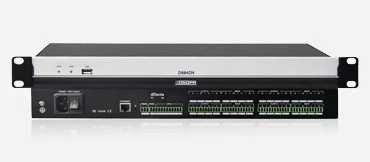
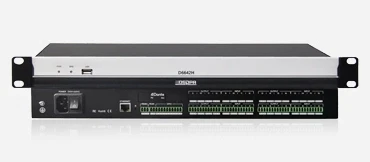

DSPPA D6576 Automatic Feedback Suppressor, 41 Notch Filters per Input

Click on the image to enlarge it

DSPPA

Click here for more DSPPA

DSPPA D6576 Automatic Feedback Suppressor, 41 Notch Filters per Input


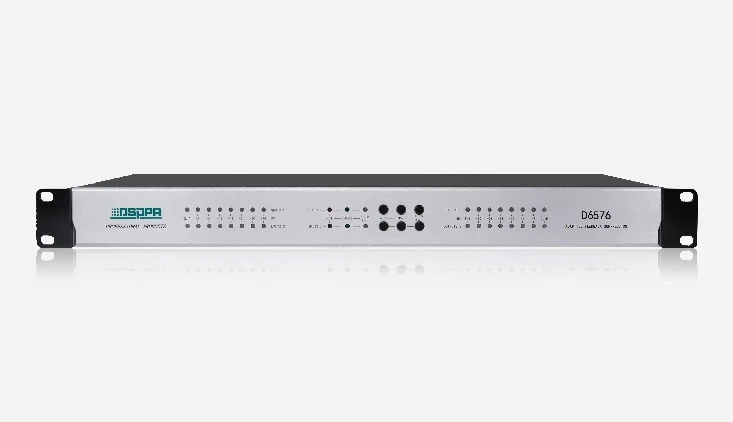
The DSPPA D6576 is a two-channel digital feedback suppressor that finds howl frequencies and notches them out automatically, with 41 adaptive filters on each input. It is made for mosques, lecture halls and meeting rooms where microphones work close to loudspeakers.

====

The DSPPA D6576 tackles the most irritating fault in any sound system: the howl you get when a microphone picks up the loudspeakers and amplifies them again. It has two balanced inputs and two balanced outputs, and each input runs 41 adaptive notch filters that hunt for feedback frequencies and pull them down automatically. It belongs between the mixer and the amplifier in mosques, lecture halls and meeting rooms.

How the DSPPA D6576 stops feedback

Feedback builds up at specific frequencies that depend on the room, the speaker positions and the microphone. Instead of lowering the whole system, the D6576 places a very narrow filter on the offending frequency only, so the imam or presenter stays clear and loud. DSPPA describes two methods working together:

  • Adaptive notch filters: 41 per input. You decide how many are dynamic, tracking new feedback as it appears, and how many are fixed on the room's known problem frequencies.
  • Frequency shifting, which makes it harder for a feedback loop to form at all.

Extra processing for microphones

The 40-bit floating-point SHARC DSP running at 400 MHz also handles jobs that help speech:

  • A noise gate that closes when nobody is talking, so hum and hiss disappear.
  • A compressor that evens out loud and quiet passages.
  • 0 to +42 dB of analog gain, plus 48V phantom power for condenser mics.

Audio performance and connections

Inputs and outputs are balanced on XLR and 6.35 mm TRS, so a mic or a mixer output connects without adapters. Maximum input and output level is 20 dBu, frequency response is 20 Hz to 20 kHz within ±1 dB, signal-to-noise ratio is 117 dB (A-weighted) and THD+N stays below 0.004%. The unit draws no more than 10 W from a 100 to 240 V supply.

Browser control and front-panel buttons

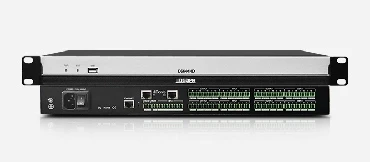
Connect the RJ45 port to your network and open the setup page in any browser on a PC, with no driver to install. The front panel carries input and output level meters, a 48V indicator and quick buttons for mute, bypass and filter reset. Bypass is handy during setup: listen with and without processing and judge the difference yourself. RS232 and RS485 terminals let a room control system take over.

Where it helps in Saudi Arabia

  • Mosques, where the imam's wireless lapel mic often sits near ceiling or column speakers.
  • University lecture halls, where presenters walk in front of the speakers with a handheld mic.
  • Hotel and corporate meeting rooms with many table mics open at once.
  • School theaters, with stage mics close to monitor speakers.

D6576 or the D6648 processor?

They do different jobs. The D6576 is a dedicated feedback suppressor: two channels, 41 notch filters per input, front-panel bypass and a 10 W draw. The D6648 is a 4-input, 8-output matrix processor with EQ, gate, compressor, limiter, AGC, delay, crossover and 60 presets, and its official page does not list feedback suppression. In larger venues the two work together: the D6576 after the mixer, then the D6648 to split the sound across zones.

Frequently Asked Questions

Does the DSPPA D6576 turn the whole mic down?

No. It places narrow notch filters on the feedback frequencies only, up to 41 per input, so overall level stays where you set it.

Where does a feedback suppressor go in the system?

After the mixer and before the amplifier or processor. With two inputs and two outputs it can treat two separate lines, such as the minbar and the main hall.

Do I need special software to set it up?

No. It is configured from a web page in any PC browser over RJ45, with no driver, and the front panel has mute, bypass and filter reset buttons.

Specifications

  • Model: D6576
  • Type: Professional automatic feedback suppressor (adaptive notch)
  • Processor: 40-bit floating-point SHARC, 400 MHz
  • Sampling rate: 48 kHz
  • D/A converter: 24-bit
  • Inputs: 2 balanced, XLR and 6.35 mm TRS
  • Input impedance: 3 kΩ
  • Max input level: 20 dBu (1% THD)
  • Outputs: 2 balanced, XLR and 6.35 mm TRS
  • Output impedance: 100 Ω
  • Max output level: 20 dBu (1% THD)
  • Frequency response: 20 Hz to 20 kHz, ±1 dB
  • THD+N: <0.004% (1 kHz, 0 dBV)
  • SNR: 117 dB (20 dBu, A-weighted)
  • Notch filters: 41 adaptive per input (dynamic/fixed split configurable)
  • DSP functions: Adaptive notch, frequency shifting, noise gate, compressor, analog gain, mute, 48V, bypass
  • Analog gain: 0 to +42 dB
  • Phantom power: 48V
  • Front panel: 7-segment input/output level meters, 48V indicator, mute, bypass and filter reset buttons
  • Network: RJ-45 TCP/IP (driver-free web page)
  • Serial control: RS232 and RS485, 3-pin pluggable terminal each
  • Power supply: AC 100 to 240 V, 50/60 Hz
  • Power consumption: 10 W max
  • Dimensions: 432.5 × 186 × 44 mm
  • Weight: 2.35 kg
  • Operating temperature: -20°C to +50°C

Features

  • 41 adaptive notch filters per input: howl frequencies are caught and cut automatically, and you set the split between dynamic and fixed filters.
  • 2 balanced channels on XLR and 6.35 mm TRS: treat two separate lines, such as the minbar mics and the main hall feed.
  • 0 to +42 dB analog gain with 48V phantom power: plug a condenser microphone straight in.
  • Driver-free web control over RJ45: adjust filters from a browser, with RS232 and RS485 for central control systems.
  • Front-panel mute, bypass and filter reset buttons: compare processed and unprocessed sound with one press.
Read more
SKU : DSPPA-D6576

1,720.12

VAT included


The DSPPA D6576 is a two-channel digital feedback suppressor that finds howl frequencies and notches them out automatically, with 41 adaptive filters on each input. It is made for mosques, lecture halls and meeting rooms where microphones work close to loudspeakers.

====

The DSPPA D6576 tackles the most irritating fault in any sound system: the howl you get when a microphone picks up the loudspeakers and amplifies them again. It has two balanced inputs and two balanced outputs, and each input runs 41 adaptive notch filters that hunt for feedback frequencies and pull them down automatically. It belongs between the mixer and the amplifier in mosques, lecture halls and meeting rooms.

How the DSPPA D6576 stops feedback

Feedback builds up at specific frequencies that depend on the room, the speaker positions and the microphone. Instead of lowering the whole system, the D6576 places a very narrow filter on the offending frequency only, so the imam or presenter stays clear and loud. DSPPA describes two methods working together:

  • Adaptive notch filters: 41 per input. You decide how many are dynamic, tracking new feedback as it appears, and how many are fixed on the room's known problem frequencies.
  • Frequency shifting, which makes it harder for a feedback loop to form at all.

Extra processing for microphones

The 40-bit floating-point SHARC DSP running at 400 MHz also handles jobs that help speech:

  • A noise gate that closes when nobody is talking, so hum and hiss disappear.
  • A compressor that evens out loud and quiet passages.
  • 0 to +42 dB of analog gain, plus 48V phantom power for condenser mics.

Audio performance and connections

Inputs and outputs are balanced on XLR and 6.35 mm TRS, so a mic or a mixer output connects without adapters. Maximum input and output level is 20 dBu, frequency response is 20 Hz to 20 kHz within ±1 dB, signal-to-noise ratio is 117 dB (A-weighted) and THD+N stays below 0.004%. The unit draws no more than 10 W from a 100 to 240 V supply.

Browser control and front-panel buttons

Connect the RJ45 port to your network and open the setup page in any browser on a PC, with no driver to install. The front panel carries input and output level meters, a 48V indicator and quick buttons for mute, bypass and filter reset. Bypass is handy during setup: listen with and without processing and judge the difference yourself. RS232 and RS485 terminals let a room control system take over.

Where it helps in Saudi Arabia

  • Mosques, where the imam's wireless lapel mic often sits near ceiling or column speakers.
  • University lecture halls, where presenters walk in front of the speakers with a handheld mic.
  • Hotel and corporate meeting rooms with many table mics open at once.
  • School theaters, with stage mics close to monitor speakers.

D6576 or the D6648 processor?

They do different jobs. The D6576 is a dedicated feedback suppressor: two channels, 41 notch filters per input, front-panel bypass and a 10 W draw. The D6648 is a 4-input, 8-output matrix processor with EQ, gate, compressor, limiter, AGC, delay, crossover and 60 presets, and its official page does not list feedback suppression. In larger venues the two work together: the D6576 after the mixer, then the D6648 to split the sound across zones.

Frequently Asked Questions

Does the DSPPA D6576 turn the whole mic down?

No. It places narrow notch filters on the feedback frequencies only, up to 41 per input, so overall level stays where you set it.

Where does a feedback suppressor go in the system?

After the mixer and before the amplifier or processor. With two inputs and two outputs it can treat two separate lines, such as the minbar and the main hall.

Do I need special software to set it up?

No. It is configured from a web page in any PC browser over RJ45, with no driver, and the front panel has mute, bypass and filter reset buttons.

Specifications

  • Model: D6576
  • Type: Professional automatic feedback suppressor (adaptive notch)
  • Processor: 40-bit floating-point SHARC, 400 MHz
  • Sampling rate: 48 kHz
  • D/A converter: 24-bit
  • Inputs: 2 balanced, XLR and 6.35 mm TRS
  • Input impedance: 3 kΩ
  • Max input level: 20 dBu (1% THD)
  • Outputs: 2 balanced, XLR and 6.35 mm TRS
  • Output impedance: 100 Ω
  • Max output level: 20 dBu (1% THD)
  • Frequency response: 20 Hz to 20 kHz, ±1 dB
  • THD+N: <0.004% (1 kHz, 0 dBV)
  • SNR: 117 dB (20 dBu, A-weighted)
  • Notch filters: 41 adaptive per input (dynamic/fixed split configurable)
  • DSP functions: Adaptive notch, frequency shifting, noise gate, compressor, analog gain, mute, 48V, bypass
  • Analog gain: 0 to +42 dB
  • Phantom power: 48V
  • Front panel: 7-segment input/output level meters, 48V indicator, mute, bypass and filter reset buttons
  • Network: RJ-45 TCP/IP (driver-free web page)
  • Serial control: RS232 and RS485, 3-pin pluggable terminal each
  • Power supply: AC 100 to 240 V, 50/60 Hz
  • Power consumption: 10 W max
  • Dimensions: 432.5 × 186 × 44 mm
  • Weight: 2.35 kg
  • Operating temperature: -20°C to +50°C

Features

  • 41 adaptive notch filters per input: howl frequencies are caught and cut automatically, and you set the split between dynamic and fixed filters.
  • 2 balanced channels on XLR and 6.35 mm TRS: treat two separate lines, such as the minbar mics and the main hall feed.
  • 0 to +42 dB analog gain with 48V phantom power: plug a condenser microphone straight in.
  • Driver-free web control over RJ45: adjust filters from a browser, with RS232 and RS485 for central control systems.
  • Front-panel mute, bypass and filter reset buttons: compare processed and unprocessed sound with one press.

See more View less