
DSPPA MP250UB 250W Mini Digital Mixer Amplifier with USB and Bluetooth

Click on the image to enlarge it

DSPPA

Click here for more DSPPA

DSPPA MP250UB 250W Mini Digital Mixer Amplifier with USB and Bluetooth


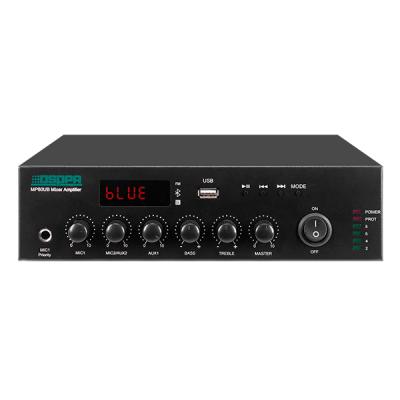
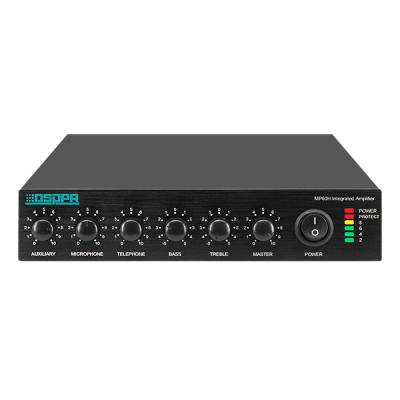
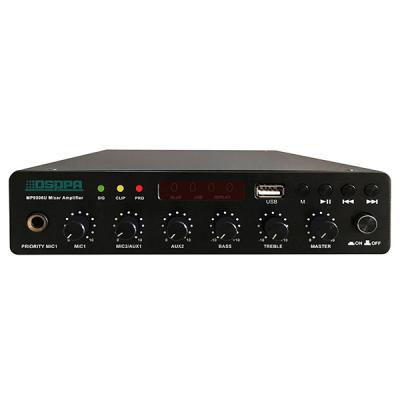
The DSPPA MP250UB is the most powerful model in DSPPA's mini digital mixer amplifier line, delivering 250W from a 1.5U case weighing 3 kg net, with Bluetooth, FM and USB. It suits restaurants, showrooms and gym halls that need more speakers than the smaller models can drive, plus a paging mic and an emergency input.

====

The DSPPA MP250UB is the top model of DSPPA's mini digital mixer amplifier range, delivering 250W into 70V or 100V lines from a 1.5U case that weighs only 3 kg net. It is the step up for venues that have outgrown a 120W unit: a restaurant with two dining halls, a car or furniture showroom, or a large gym floor where you need more speakers but still want simple Bluetooth playback.

DSPPA MP250UB by the numbers

  • Rated output: 250W.
  • 70V and 100V constant-voltage output.
  • 2 mic inputs, 2 line inputs, 1 line output.
  • 2 EMC inputs (100V and 375mV) and 1 EMC output.
  • Mic sensitivity 8mV, mic response 200Hz-10kHz.
  • Line response 100Hz-16kHz, distortion below 1%.

How many speakers can it run?

On a 100V line, add up the tap wattage you choose for each speaker and keep the total under 250W with some headroom. With ceiling speakers tapped at 10W, the math allows roughly 25 speakers, a few less once you leave a margin. That covers dining areas, corridors and washrooms from one unit instead of two small amplifiers.

Phone music and a paging mic

The Mode button cycles through Bluetooth, USB, AUX and FM, and the display shows the active source. MIC1, a 6.3 mm jack on the front, has priority over music so order calls and staff pages come through clearly. MIC2 is an XLR on the back with 24V phantom power; it shares a channel with AUX2 via a selector switch, so lower the volume before switching. Every mic and line input has its own level knob, plus bass, treble, master volume and an IR remote.

Emergency input and backup power

The two EMC inputs (100V and a general 375mV input) sit at the top of the priority chain with MIC1, so an alarm signal from another system overrides music and MIC2. A rear 24V DC input lets the unit run from a battery source during an outage.

Power and installation

The MP250UB runs on 110-120V or 220-240V at 50 or 60Hz, selected with a rear switch. Set it to 220-240V before powering up on a 220V or 230V supply. At 250 × 230 × 66 mm it sits on a shelf or inside a cabinet. Never connect any speaker terminal to ground.

Where it fits in Saudi Arabia

  • Large restaurants and cafes: dining-hall music and order calls from the counter.
  • Car and furniture showrooms: background music across a wide floor with sales announcements.
  • Gyms: weights and cardio areas on one 100V line.
  • Small mosques and prayer rooms: a mic for the imam and more indoor speakers.

MP250UB or MP120UB?

Both share the same inputs, Bluetooth, display and 3 kg net weight. The MP250UB gives 250W against 120W, and its mains input is set by a switch (110-120V or 220-240V) where the MP120UB accepts 110-240V without one. The MP250UB is deeper (250 mm vs 198 mm) and narrower (230 mm vs 247 mm). Choose the MP250UB once your speaker total passes 120W.

Frequently Asked Questions

How does the MP250UB differ from the MP120UB?

250W vs 120W; the MP250UB needs its mains switch set (110-120V or 220-240V) and is deeper (250 mm) and narrower (230 mm). Inputs and Bluetooth are identical.

Can I use a condenser mic?

Yes. MIC2 on the rear is an XLR input with 24V phantom power.

Specifications

  • Model: MP250UB
  • Series: MP35UB / MP60UB / MP120UB / MP250UB mini digital mixer amplifiers
  • Height: 1.5U
  • Rated output power: 250W
  • Output voltage: 70V, 100V constant voltage
  • Inputs and outputs: 2 mic (MIC1 6.3 mm front, MIC2 XLR rear), 2 line in, 1 line out
  • EMC inputs: 2 (100V and 375mV), 1 EMC out
  • Phantom power: 24V on MIC2
  • Built-in sources: Bluetooth, FM radio, USB MP3 player
  • Priority: EMC/MIC1 > AUX1/AUX2/MIC2
  • Controls: Master volume, individual MIC/LINE volume, bass, treble, IR remote
  • Power supply: AC 110-120V / 220-240V, 50/60Hz (switch selectable)
  • Backup power input: 24V DC
  • MIC1 / MIC2 sensitivity: 8mV ±10%
  • AUX1 / AUX2 sensitivity: 350mV ±10%
  • EMC input sensitivity: 350mV ±10%
  • MIC frequency response: 200Hz-10kHz (±3dB)
  • AUX frequency response: 100Hz-16kHz (±3dB)
  • Noise: <10mV
  • Distortion: <1% at 1kHz
  • Bass / Treble: 10dB (±2)
  • Unit size (D×W×H): 250 × 230 × 66 mm
  • Net weight: 3 kg

Features

  • 250W with 70V and 100V outputs: run more ceiling and wall speakers on one long line.
  • Built-in Bluetooth, USB and FM: background music from a phone or USB stick with no extra gear.
  • Two mic inputs including XLR with 24V phantom: a front paging mic plus a fixed condenser mic.
  • Two EMC inputs (100V and 375mV) at top priority: an alarm signal overrides music and MIC2.
  • Switchable 110-120V or 220-240V mains: works on either common voltage once the switch is set.
Read more
SKU : DSPPA-MP250UB

1,150.68

VAT included


The DSPPA MP250UB is the most powerful model in DSPPA's mini digital mixer amplifier line, delivering 250W from a 1.5U case weighing 3 kg net, with Bluetooth, FM and USB. It suits restaurants, showrooms and gym halls that need more speakers than the smaller models can drive, plus a paging mic and an emergency input.

====

The DSPPA MP250UB is the top model of DSPPA's mini digital mixer amplifier range, delivering 250W into 70V or 100V lines from a 1.5U case that weighs only 3 kg net. It is the step up for venues that have outgrown a 120W unit: a restaurant with two dining halls, a car or furniture showroom, or a large gym floor where you need more speakers but still want simple Bluetooth playback.

DSPPA MP250UB by the numbers

  • Rated output: 250W.
  • 70V and 100V constant-voltage output.
  • 2 mic inputs, 2 line inputs, 1 line output.
  • 2 EMC inputs (100V and 375mV) and 1 EMC output.
  • Mic sensitivity 8mV, mic response 200Hz-10kHz.
  • Line response 100Hz-16kHz, distortion below 1%.

How many speakers can it run?

On a 100V line, add up the tap wattage you choose for each speaker and keep the total under 250W with some headroom. With ceiling speakers tapped at 10W, the math allows roughly 25 speakers, a few less once you leave a margin. That covers dining areas, corridors and washrooms from one unit instead of two small amplifiers.

Phone music and a paging mic

The Mode button cycles through Bluetooth, USB, AUX and FM, and the display shows the active source. MIC1, a 6.3 mm jack on the front, has priority over music so order calls and staff pages come through clearly. MIC2 is an XLR on the back with 24V phantom power; it shares a channel with AUX2 via a selector switch, so lower the volume before switching. Every mic and line input has its own level knob, plus bass, treble, master volume and an IR remote.

Emergency input and backup power

The two EMC inputs (100V and a general 375mV input) sit at the top of the priority chain with MIC1, so an alarm signal from another system overrides music and MIC2. A rear 24V DC input lets the unit run from a battery source during an outage.

Power and installation

The MP250UB runs on 110-120V or 220-240V at 50 or 60Hz, selected with a rear switch. Set it to 220-240V before powering up on a 220V or 230V supply. At 250 × 230 × 66 mm it sits on a shelf or inside a cabinet. Never connect any speaker terminal to ground.

Where it fits in Saudi Arabia

  • Large restaurants and cafes: dining-hall music and order calls from the counter.
  • Car and furniture showrooms: background music across a wide floor with sales announcements.
  • Gyms: weights and cardio areas on one 100V line.
  • Small mosques and prayer rooms: a mic for the imam and more indoor speakers.

MP250UB or MP120UB?

Both share the same inputs, Bluetooth, display and 3 kg net weight. The MP250UB gives 250W against 120W, and its mains input is set by a switch (110-120V or 220-240V) where the MP120UB accepts 110-240V without one. The MP250UB is deeper (250 mm vs 198 mm) and narrower (230 mm vs 247 mm). Choose the MP250UB once your speaker total passes 120W.

Frequently Asked Questions

How does the MP250UB differ from the MP120UB?

250W vs 120W; the MP250UB needs its mains switch set (110-120V or 220-240V) and is deeper (250 mm) and narrower (230 mm). Inputs and Bluetooth are identical.

Can I use a condenser mic?

Yes. MIC2 on the rear is an XLR input with 24V phantom power.

Specifications

  • Model: MP250UB
  • Series: MP35UB / MP60UB / MP120UB / MP250UB mini digital mixer amplifiers
  • Height: 1.5U
  • Rated output power: 250W
  • Output voltage: 70V, 100V constant voltage
  • Inputs and outputs: 2 mic (MIC1 6.3 mm front, MIC2 XLR rear), 2 line in, 1 line out
  • EMC inputs: 2 (100V and 375mV), 1 EMC out
  • Phantom power: 24V on MIC2
  • Built-in sources: Bluetooth, FM radio, USB MP3 player
  • Priority: EMC/MIC1 > AUX1/AUX2/MIC2
  • Controls: Master volume, individual MIC/LINE volume, bass, treble, IR remote
  • Power supply: AC 110-120V / 220-240V, 50/60Hz (switch selectable)
  • Backup power input: 24V DC
  • MIC1 / MIC2 sensitivity: 8mV ±10%
  • AUX1 / AUX2 sensitivity: 350mV ±10%
  • EMC input sensitivity: 350mV ±10%
  • MIC frequency response: 200Hz-10kHz (±3dB)
  • AUX frequency response: 100Hz-16kHz (±3dB)
  • Noise: <10mV
  • Distortion: <1% at 1kHz
  • Bass / Treble: 10dB (±2)
  • Unit size (D×W×H): 250 × 230 × 66 mm
  • Net weight: 3 kg

Features

  • 250W with 70V and 100V outputs: run more ceiling and wall speakers on one long line.
  • Built-in Bluetooth, USB and FM: background music from a phone or USB stick with no extra gear.
  • Two mic inputs including XLR with 24V phantom: a front paging mic plus a fixed condenser mic.
  • Two EMC inputs (100V and 375mV) at top priority: an alarm signal overrides music and MIC2.
  • Switchable 110-120V or 220-240V mains: works on either common voltage once the switch is set.

See more View less