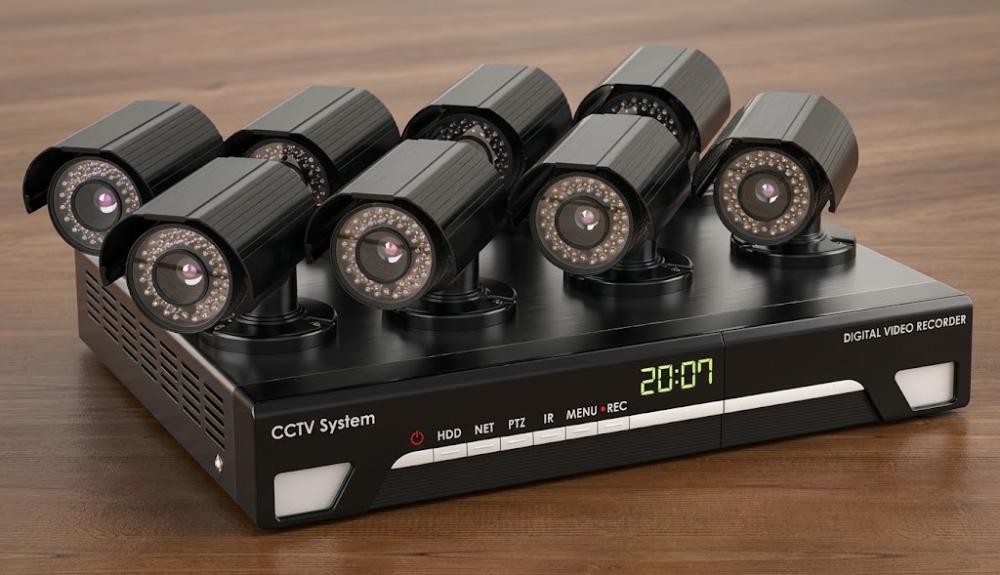
Difference Between NVR, DVR, and XVR: Which Camera Recorder Suits You?

The recorder collects footage from every camera, stores it, and is what you watch from on your phone. You do not pick it by price. You pick it by the cameras and cabling you have. This guide puts NVR vs DVR vs XVR side by side in one table, then matches a Uniview recorder to each case: a brand-new system, or an older coax system you want to upgrade.

NVR vs DVR vs XVR at a glance

DVRXVRNVR
CamerasAnalog onlyAnalog and IPIP only
CableCoaxCoax, plus network cable for IPNetwork cable
Camera powerAdapter per cameraAdapter per analog cameraPoE from the recorder or a switch
Video processingIn the recorderIn the recorder for analogIn the camera
Best forAn old system you will not changeUpgrading coax in stagesAny new system


In short: for a new installation, choose an NVR. If you already have working analog cameras on coax, choose an XVR rather than a DVR, because it takes the same cameras and adds IP channels.

What is a DVR?

A DVR records analog cameras. The camera sends its picture over coax, the recorder converts it to digital video and saves it to the hard drive, and every camera needs its own power adapter. You still find DVRs in many older shops and villas, but they cannot take IP cameras, which is why the XVR has replaced them.

What is an XVR?

An XVR is a hybrid recorder. It works with analog cameras on all four standards (AHD, TVI, CVI and CVBS) and adds channels for IP cameras, so you keep your existing cameras and cabling and add IP cameras whenever you need them.

  • XVR301-04G3: records 4 analog cameras up to 5MP plus 2 IP cameras. A good fit for small villas, shops and istirahas replacing an old DVR.
  • XVR301-08Q3: records 8 analog cameras up to 8MP plus 4 IP cameras (up to 12), with perimeter protection and 4 alarm inputs. Suited to schools, warehouses and compounds.

To get a sharper picture on existing coax without rewiring, swap old cameras for a modern analog model such as the UAC-B115-AF28, a 5MP bullet with a 102.2° view, built-in microphone and 20 m night vision.

[cta:1714162522]

What is an NVR?

An NVR records IP cameras only. Each camera processes its own image and sends it digitally over the network cable, which allows higher resolution. Most modern NVRs also have PoE ports, so one network cable carries both power and video and you do not need an adapter at every camera.

Uniview NVRs by camera count:

RecorderCamerasPoE portsBest for
NVR301-04S3-P444 ports, 54 WSmall villa, shop, office
NVR301-08S3-P888 ports, 75 WTwo-storey villa, supermarket
NVR501-08B-P88, up to 16MP8 ports, 75 WOffice, clinic, villa
NVR502-16B-P161616 ports, 240 WWarehouse, school, compound


If your NVR has no PoE ports, or you have more cameras than ports, add a PoE switch such as the 16-port Uniview NSW2010-18GT2GP. Browse all NVR recorders.

[cta:1403243449]

When is it worth moving from coax to an NVR?

If your coax is old or damaged, or you want features analog cameras cannot offer, such as two-way audio and person detection inside the camera, moving to an NVR is the better choice. And if you are re-cabling anyway for a renovation or extension, run network cable instead of coax, since one cable carries both power and video with PoE.

If the cabling is sound and your current cameras are good enough, an XVR raises the resolution and puts off the cost of re-cabling, and you can add IP cameras to the same recorder later.

Which recorder should you choose?

  • Working coax cameras already installed: an XVR, so you keep the cameras and add IP later.
  • New system for a villa or shop with 4 cameras: the NVR301-04S3-P4 with IP cameras such as the IPC328LE-ADF28K-H dome.
  • Two-storey villa with 5 to 8 cameras: the NVR301-08S3-P8 or NVR501-08B-P8.
  • Warehouse or school with 16 cameras: the NVR502-16B-P16, with built-in PoE and two drive bays.

Whichever recorder you choose, fit a surveillance-rated hard drive built for recording around the clock. How long footage is kept depends on drive capacity, camera count and resolution.

Buy CCTV recorders from Misbar Alhasibat

Misbar stocks Uniview recorders in every size, together with security cameras of all types, including dome and bullet models, and PoE switches to grow the system. Starting from scratch? Read our CCTV buying guide to choose the cameras before the recorder.

Prices on the store are final and include VAT, and you can split the payment with Tabby. Not sure how many channels you need? Message us on WhatsApp.

Browse all recorders at Misbar →

FAQ

Can I connect an IP camera to a DVR?

No. A DVR works with analog cameras only. To mix both types, choose an XVR, or move fully to an NVR.

Does the recorder keep recording without internet?

Yes. Recording happens on the hard drive inside the recorder. Internet is only needed to watch from your phone away from the site.

Do I need a switch with an NVR?

Not if the recorder has enough PoE ports for your cameras, like the NVR301-04S3-P4 for 4 cameras. You need one if the recorder has no PoE or you have more cameras than ports.

Can I replace an old DVR with an XVR and keep my cameras?

In most cases, yes, because Uniview XVRs support all four analog standards: AHD, TVI, CVI and CVBS. Just check which standard your current cameras use.

How many hard drives does a recorder take?

Smaller models like the NVR301-08S3-P8 have one bay for a drive up to 10TB, while the NVR502-16B-P16 has two bays for drives up to 24TB each, so it keeps footage for longer.

Difference Between NVR, DVR, and XVR: Which Camera Recorder Suits You?

Related articles

How to Choose a Parking Barrier for Compounds and Towers
14 November 2026
Sobhy

How to Choose a Parking Barrier for Compounds and Towers

How to choose a parking barrier starts with five questions: how wide is the lane, how many cars pass per hour, how will you stop the boom coming down on a car, how will the barrier open, and what happens in a power cut. The answers decide the barrier, the boom and the accessories together, because in most cases the barrier is sold as the body only. This guide answers them with figures from the Italian BFT barriers Misbar stocks, and gives you 3 ready setups for a residential compound, a tower and a warehouse.

Quick pick: which barrier for which entrance?

BarrierLane widthOpening timeMotorBest for
MOOVI 303 mDepends on boom230 VResidential compounds, villas and warehouses with moderate traffic
MOOVI 606 m8 s230 VWide entrances with moderate traffic, such as truck gates
GIOTTO ULTRA 362 to 6 m2.2 to 4 s24 VTowers, malls and hospitals with heavy traffic


In short: a normal 3 m entrance with moderate traffic needs only the MOOVI 30. A wide entrance up to 6 m takes the MOOVI 60. An entrance where cars queue at peak times calls for the GIOTTO ULTRA 36, which is faster and runs on a 24 V motor.

Step 1: Measure the lane and choose the boom

Lane width sets the boom length, and boom length sets the barrier. The boom and its mounting kit are ordered separately from the barrier body:

BarrierCompatible boomMounting kit
MOOVI 30AQ3 rectangular 3 mOMEGA AQ
MOOVI 60ASTA 6MT round 6 m, or AQ5 rectangular 5 mOMEGA AT for round, OMEGA AQ for rectangular
GIOTTO ULTRA 36BFT BOOM PS or BOOM ES boomsOMEGA PS for PS booms


Measure the actual width between the lane edges, not the whole road. If the lane falls between 3 and 5 m, choose a barrier that takes a boom longer than you need, never shorter.

Step 2: Estimate traffic and opening speed

At a residential compound, cars come and go at a steady pace through the day. At an office tower, mall or hospital, cars queue at the barrier during peak hours, and every second of opening time lengthens the line.

  • MOOVI: a 230 V motor that BFT rates for semi-intensive use. The MOOVI 60 raises its long boom in 8 seconds, with adjustable slowdown at the end of travel.
  • GIOTTO ULTRA 36: a 24 V motor that opens in 2.2 seconds with a boom up to 4 m, and 4 seconds with a boom up to 6 m on the XL version. An encoder tracks boom movement and reverses it on impact, and the built-in control board supports U-Link.

The rule of thumb: if the entrance sees daily queues, pay the difference for the GIOTTO. If traffic is moderate, the MOOVI is enough and saves you money.

[cta:69061443]

Step 3: Mind the heat and the install spot

BFT rates the MOOVI for -20 to +50°C with IP24 protection. In a Saudi summer, metal in direct sun can run hotter than the air, so if the entrance is fully exposed, consider a canopy over the barrier. Fix the body on a level concrete base and leave space around it to open the cover for service.

Before pouring the base, lay cable conduits from the barrier to the power source and to the photocell position on the far side of the lane. Skip this and you will be cutting asphalt later. If you plan to add a loop detector or a plate recognition camera in the future, lay a spare conduit now.

Step 4: Safety: photocells, flashers and boom lights

The most dangerous moment is the boom coming down on a car that is still passing. An installation isn't complete without protection:

  • Photocell: the COMPACTA A20-180 is an infrared transmitter and receiver pair with a 20 m range. If a car breaks the beam, the boom won't lower. The head swivels 90° each way and fits MOOVI and GIOTTO barriers with the P903031 bracket, ordered separately.
  • Loop detector: a wire loop buried in the asphalt under the boom senses the metal car above it, keeping the boom raised until the car clears. It complements the photocell rather than replacing it.
  • Flasher: the RADIUS LED AC A R1 is a 230 V LED light with IP44 protection that warns drivers and pedestrians the boom is moving. It has a built-in 433.92 MHz receiver antenna.
  • Boom lights: the MOOVI LIGHT 1 kit for 5 to 6 m booms, so drivers see the boom in dark car parks.

[cta:1474468946]

Step 5: How will the barrier open?

Who uses the entrance decides how it opens. Residents and regular staff suit a remote or a card, subscribers at a tower or mall car park suit plate recognition, and visitors need a guard or an intercom. Most entrances combine two methods or more.

  • Remote: the MITTO COOL C2 has two buttons, 433 MHz and rolling code that is hard to clone, with 50 to 100 m range. Suits residents and the guard.
  • Card reader or intercom: sends an open command to the barrier board. Check before buying that the device output matches the control board input.
  • Plate recognition camera: the Uniview PKC2640@Z28-P is a 4MP camera with a 2.8 to 12 mm lens built for car park entrances. It detects vehicles by video and reads plates at up to 30 km/h, so the barrier opens for registered cars without stopping. Confirm with us that it supports the Saudi plate format before ordering.

Step 6: What happens in a power cut?

The MOOVI has a mechanical lock and a personal release key, so the guard can lift the boom by hand during an outage and lock it again afterwards. For entrances that can't afford downtime, ask us about a backup battery kit compatible with the barrier you choose.

3 ready setups

Residential compoundTower or mallWarehouse with a wide gate
BarrierMOOVI 30GIOTTO ULTRA 36MOOVI 60
Boom and mountAQ3 + OMEGA AQBOOM PS + OMEGA PSASTA 6MT + OMEGA AT
SafetyCOMPACTA + RADIUS LEDCOMPACTA + loop + RADIUS LEDCOMPACTA + MOOVI LIGHT 1
OpeningMITTO COOL C2 remotePKC2640 camera for subscribersRemote for the guard and drivers


[cta:244149824]

For bigger entrances: MAXIMA ULTRA

Misbar also stocks the MAXIMA ULTRA 36, 36XL and 68 SM barriers with their accessories, such as the 4 m BOOM PS40 and its LIGHT PS/ES 40-IP67 lighting for the MAXIMA ULTRA 36. If your entrance doesn't suit the MOOVI or GIOTTO, send us the lane width and daily car count and we will recommend the right version.

4 common mistakes when buying a parking barrier

  1. Buying the barrier body alone: the boom, mounting kit and photocell are ordered separately. Plan for them from the start so installation isn't delayed.
  2. A boom shorter than the lane: it leaves a gap for a car or motorbike to slip through. Measure the real width.
  3. A slow barrier at a busy entrance: 8 seconds to open is fine at a warehouse but builds a queue at a mall exit.
  4. Installing without a photocell: the first car the boom hits will cost more than the photocell.

Buy your parking barrier from Misbar Alhasibat

Misbar stocks BFT parking barriers in the MOOVI, GIOTTO and MAXIMA ULTRA series, along with booms, mounting kits, photocells, flashers, remotes and boom lights, plus Uniview plate recognition cameras. Browse every BFT product on the brand page.

Prices on the store are final and include VAT, and you can split the payment with Tabby. Send us the lane width, a photo of the entrance and your daily car count on WhatsApp, and we will put together the full list of barrier and accessories.

Browse all parking barriers at Misbar →

FAQ

How do I choose a parking barrier?

Measure the lane to set the boom length, estimate traffic to choose between the MOOVI for moderate use and the GIOTTO for heavy use, then add a photocell, a flasher and the opening method that suits you.

Does the boom come with the barrier?

No. BFT barriers are sold as the body only, and the boom and mounting kit are ordered by lane width, such as the AQ3 with OMEGA AQ for the MOOVI 30.

What is the difference between MOOVI and GIOTTO?

The MOOVI uses a 230 V motor for moderate traffic and covers up to 3 m (MOOVI 30) or 6 m (MOOVI 60). The GIOTTO ULTRA 36 uses a faster 24 V motor, opening in 2.2 seconds with a boom up to 4 m, and its encoder reverses the boom on impact.

How do I open the barrier in a power cut?

On the MOOVI, release the mechanical lock with the personal key and lift the boom by hand.

Can the barrier open by reading number plates?

Yes, with a plate recognition camera such as the PKC2640@Z28-P that reads the plate and opens for registered cars. Confirm with us that it works with the barrier's control board and the Saudi plate format.

Which barrier should you choose?

  • Residential compound or villa with a 3 m entrance: the MOOVI 30 with an AQ3 boom.
  • Wide entrance up to 6 m with moderate traffic: the MOOVI 60 with an ASTA 6MT boom.
  • Tower, mall or hospital with heavy traffic: the GIOTTO ULTRA 36.
  • For every barrier: a COMPACTA A20-180 photocell and a RADIUS LED flasher.


Read More
PoE Switch Buying Guide for Security Cameras and Access Points
14 November 2026
Sobhy

PoE Switch Buying Guide for Security Cameras and Access Points

How to choose a PoE switch comes down to six questions: how many devices you will connect, how many watts they draw together, which PoE standard they need, what port speed, whether you need management, and how the switch connects to your recorder or router. A wrong switch rarely fails on install day; it fails weeks later when a camera starts rebooting at night. This guide answers all six with numbers and suggests a Uniview, Grandstream or Huawei switch for each case.

Quick pick: which PoE switch for which site?

UseSwitchPoE portsBudgetManagement
Home or shop with 4 camerasNSW2010-5GT-POE-IN-UK4 gigabit60 WUnmanaged
Villa with 8 camerasNSW2010-10GT-POE-IN8 gigabit120 WUnmanaged + EXTEND
Villa or office with access pointsGWN7701PA8 gigabit145 WUnmanaged
Warehouse or compound with 24 camerasNSW3000-24T1GT1GC-POE-IN24 × 10/100370 WCloud
Office: cameras, APs and phonesGWN7802P16 gigabit240 WManaged L2+
Wi-Fi 7 APs and PTZ camerasGWN7802P Pro16, up to 60 W each250 WManaged + 10G
Huawei eKit networkS220-24P4X24 gigabit PoE+400 WManaged + 4 × 10G


Step 1: Count the ports

Count every device that will draw power from the switch: cameras, access points, IP phones and intercom units. Then add 20% spare ports for the camera or AP you will add later. A villa with 6 cameras and 2 access points needs 8 ports, and is better served by a switch with 8 PoE ports plus two extra uplinks than one with 8 ports in total.

Remember that uplink ports don't power anything. The NSW2010-10GT-POE-IN, for example, has 10 ports: 8 PoE plus 2 for the recorder and router.

Step 2: Work out the PoE power budget

The PoE budget is the total wattage the switch can share across all ports at once. Add up each device's maximum draw from its spec sheet, then add 25% headroom. Here are examples from devices Misbar stocks:

DeviceTypeMax drawStandard
IPC3618LE-ADF28KC-DL8MP turret camera5.2 W802.3af
IPC6424SR-X25-VFPTZ camera21 W802.3at
Huawei AP362EWi-Fi 6 access point9.4 W802.3af
GWN7660EWi-Fi 6 access point12.95 W802.3af/at
GWN7664E4×4 AP for halls21 W802.3at


Villa example: 8 IPC3618LE cameras × 5.2 W = 41.6 W, plus one 21 W PTZ. That is 62.6 W, or 78 W with headroom. The 120 W NSW2010-10GT-POE-IN covers it, with a spare PoE port left over.

Office example: 12 cameras × 5.2 W = 62.4 W, plus 4 GWN7660E access points × 12.95 W = 51.8 W. That is 114.2 W, or 143 W with headroom, across 16 devices. Here you need the GWN7802P with 16 PoE ports and a 240 W budget.

Read the spec sheet closely: some switches can't give every port full power at once. The Huawei S210-8P2J, with a 128 W budget, runs all 8 ports at 15.4 W but only 4 ports at 30 W simultaneously.

[cta:1572542891]

Step 3: Match the PoE standard

  • 802.3af (PoE): up to 15.4 W per port. Enough for most fixed cameras, small Wi-Fi 6 access points and IP phones.
  • 802.3at (PoE+): up to 30 W per port. For PTZ cameras, high-density APs and Wi-Fi 7 units such as the GWN7670E.
  • 802.3bt (PoE++): up to 60 W per port on the GWN7802P Pro. For the most power-hungry devices and room for future upgrades.

Every PoE+ switch also powers af devices, but not the other way round. If even one device needs at, buy a PoE+ switch.

Step 4: Port speed: 100 Mbps or gigabit?

A single camera stream is far below 100 Mbps, so a 10/100 port is enough for it. That is how the Uniview NSW2020 and NSW3000 switches are built, such as the NSW3000-24T1GT1GC-POE-IN with 24 PoE ports at 10/100 and two gigabit uplinks. All the camera traffic then travels over the gigabit port to the recorder.

Access points are different. They need at least gigabit ports, since Wi-Fi 6 speeds go well beyond 100 Mbps, and a Wi-Fi 7 AP with a 2.5G port only reaches full speed on a 2.5G switch port. So don't buy a 100 Mbps switch for a network with access points.

Step 5: Managed or unmanaged?

  • Unmanaged: plug in and go. Enough for homes, villas and shops. The Uniview NSW2010 switches add a VLAN mode that isolates camera ports so they only talk to the uplinks, and an EXTEND mode that reaches up to 250 m for a distant camera.
  • Cloud-managed: such as the NSW3000, which shows PoE draw per port, lets you turn a camera port off and on remotely, and discovers video devices to map the network.
  • Managed L2+: such as the GWN7802P and GWN7803P. For companies that separate cameras, phones and guest Wi-Fi into VLANs and need Voice VLAN, QoS and IGMP snooping.

[cta:1821114803]

Step 6: Uplinks and SFP ports

Copper Ethernet reaches 100 m in normal mode. If the switch sits in one building and the router or recorder in another, use SFP ports with fibre. The GWN7802P has 4 × 1G SFP ports, the GWN7802P Pro 2 × 10G SFP+, and the Huawei S220-24P4X 4 × 10GE SFP+.

10G uplinks matter when a switch aggregates dozens of access points or links floors together, so the uplink doesn't become the bottleneck.

[cta:1095947608]

Suggested PoE switches by size

[cta:1938899985]

4 common mistakes when buying a PoE switch

  1. A budget with no margin: a 60 W switch for devices drawing 58 W runs fine by day and drops a camera at night when the IR turns on. Leave 25%.
  2. An af switch for a PTZ camera: a camera that needs 21 W won't run on a port capped at 15.4 W.
  3. 100 Mbps ports for access points: they choke your Wi-Fi however good the AP is.
  4. Runs over 100 m without EXTEND or fibre: the distant camera keeps dropping. Use EXTEND mode or an SFP port.

Buy PoE switches from Misbar Alhasibat

Misbar stocks network switches from Uniview, Grandstream and Huawei: unmanaged, cloud-managed and managed L2+, from 4 to 48 ports. Read our CCTV buying guide and best access point guide alongside this one to choose the devices the switch will power.

Prices on the store are final and include VAT, and you can split the payment with Tabby. Send us your camera and access point count and models on WhatsApp, and we will work out the PoE budget with you and suggest a switch.

Browse all network switches at Misbar →

FAQ

How do I choose a PoE switch?

Count your devices and add 20% spare ports, add up their wattage plus 25%, choose PoE+ if any device needs 802.3at, gigabit ports if you have access points, and a managed switch if you need VLANs.

How many watts do 8 security cameras need?

Most fixed cameras draw 5 to 6 W, so 8 cameras need about 50 W, or 60 to 65 W with headroom. Add 21 W for a PTZ camera if you have one.

Will a PoE switch damage my PC or TV?

No. IEEE-standard PoE switches detect the device first and only send power to devices that request it, so a PC just gets a network connection.

What is the difference between PoE and PoE+?

PoE (802.3af) delivers up to 15.4 W per port, and PoE+ (802.3at) up to 30 W for PTZ cameras and larger access points.

What if a camera is more than 100 m away?

Turn on EXTEND mode on a Uniview switch such as the NSW2010-10GT-POE-IN to reach up to 250 m, or place a second switch near the camera and link it over fibre through an SFP port.

Which PoE switch should you choose?

Read More
Complete Mosque Sound System: How to Choose the Amplifier, Speakers and Microphones
14 November 2026
Sobhy

Complete Mosque Sound System: How to Choose the Amplifier, Speakers and Microphones

This mosque sound system guide starts with the mosque, not the equipment. The number of areas you want to control decides the amplifier, the shape of each area decides the speaker type, and the total speaker wattage decides the power. We walk through 6 steps with real numbers, from splitting the mosque into zones to stopping feedback, and give you 3 ready setups for a small prayer room, a neighbourhood mosque and a large Friday mosque, all built from DSPPA equipment available at Misbar.

The parts of a mosque sound system

PartRoleExamples at Misbar
MicrophonesPick up the imam, khateeb and muezzinCM30 desk mic, D7822 wireless lavalier, D7821 wireless handheld
AmplifierCombines the mics, amplifies and routes audio to each areaDMA6350U 6-zone, DMA250U, MP1000PIII
SpeakersDeliver sound to worshippers inside and outsideDSP255IIW column, DSP8064W wall, DSP7011 ceiling, DSP1650 horn
Add-onsFeedback control and paging from the officeD6576 feedback suppressor, DMA20 paging mic


Step 1: Split the mosque into areas

Before buying anything, sketch the mosque and list every area that needs sound. Most mosques have 3 to 5:

  • Main prayer hall: the largest and most important area.
  • Women's section: often needs a different volume.
  • Courtyard or outer area: fills up on Fridays and in Ramadan.
  • Minaret or roof: for the adhan.
  • Corridors, washrooms and wudu areas: low volume so latecomers hear the iqama.

Every area you want to turn up, down or off on its own needs its own zone on the amplifier. With 3 or more areas, you need a zoned amplifier; otherwise the outside gets louder every time you raise the prayer hall.

Step 2: Pick the right speaker for each area

We cover speakers in depth in our guide to the best mosque speakers. Here is the summary:

AreaSpeaker typeModelPower
Large hall with a high ceilingColumnDSP255IIW30 W
Pillars and side wallsWallDSP8064W5 to 40 W taps
Women's section and corridors with a false ceilingCeilingDSP701110 W at 100 V
Courtyard and minaretHornDSP1650 or DSP163HD50 W / 25 W


The two horns differ in a way that matters. The DSP1650 is IP66-rated and louder, up to 123 dB, but covers 280 Hz to 4.5 kHz, which suits the long reach the adhan needs. The DSP163HD is a 2-way horn covering 200 Hz to 15 kHz, so recitation in the courtyard sounds clearer.

[cta:1187592967]

Step 3: Add up the power and choose the amplifier

Mosque speakers run on a 100 V line, and each one has a transformer where you set its wattage. The method: add up every speaker's wattage, add 20 to 30% headroom, then pick the next amplifier size up.

Example for a mid-size neighbourhood mosque:

  • Main hall: 8 DSP255IIW column speakers × 30 W = 240 W.
  • Women's section: 6 DSP7011 ceiling speakers × 10 W = 60 W.
  • Courtyard: 2 DSP1650 horns on the 25 W tap = 50 W.
  • Total 350 W; with 25% headroom that is 437.5 W, so the 500 W DMA6500U covers it.

Why the DMA6 series? It has 6 zones with a volume knob each, 4 mic inputs with 48 V phantom power, a 24 V DC backup input and two ports for remote paging mics. We compare every DSPPA series in our DSPPA amplifier guide.

[cta:1919405398]

3 ready setups by mosque size

Small prayer roomNeighbourhood mosqueLarge Friday mosque
AreasOne area3 areas5 or 6 areas
Speakers6 DSP8064W wall speakers at 10 W8 column + 6 ceiling + 2 hornColumn, ceiling and horn per area
AmplifierMP120UB, 120 WDMA6500U, 500 WDMA6650U, 650 W
MicrophonesD7821 kit (two wireless handhelds)CM30 + D7822 kitCM30 + D7822 + D7821
Add-onsNot neededD6576 feedback suppressorD6576 + DMA20 paging mic


In the small prayer room, 6 × 10 W = 60 W, or 75 W with headroom, so the MP120UB is enough, paired with a D7821 two-mic kit for the imam and muezzin. In a large mosque whose speakers exceed 650 W, split the load: the zoned amplifier for the inside, and a DA-series power amplifier for the outside area fed from the LINE output.

Step 4: Choose the microphones

  • Imam's mic at the mihrab: the CM30 is a unidirectional desk mic on a 455 mm stem, resistant to mobile phone interference, that picks up the imam and reduces everything around him. Note that it needs 48 V phantom power, which the DMA6 amplifiers provide; the MP120UB and MP250UB only offer 24 V phantom on their second input.
  • Khateeb's mic: the D7822 kit includes a receiver, two wireless lavalier mics and two belt-pack transmitters, so the khateeb moves freely with his hands free. It offers 200 UHF channels and 150 m range in open space.
  • Handheld mic for the muezzin and lessons: the D7821 kit has a receiver and two wireless handheld mics, with the same channels and range.

A two-mic kit gives you a ready spare: if the khateeb's battery dies on a Friday, the second mic takes over straight away.

[cta:1222881785]

Step 5: Stop feedback before it starts

Feedback happens when a mic picks up a speaker and the amplifier boosts it again in a loop. Prevention starts with installation: never point a speaker at the mihrab or minbar, keep speakers in front of the mic line rather than behind it, and don't run the hall louder than needed.

If feedback remains after that, the D6576 sits between the mic and the amplifier. Its SHARC processor detects the feedback frequency and cuts it automatically with 41 adaptive notch filters per input, plus a noise gate, compressor and 48 V phantom power. With two balanced inputs and outputs, it covers both the imam's and the khateeb's mic.

[cta:1953141]

Step 6: Add a paging mic for the office

In a large mosque, or one with a Quran school or admin office, you sometimes need to page one area without using the mihrab mic. The DMA20 is a gooseneck desk mic with 6 zone buttons, an all-zone call button and a chime. It connects to DMA6 amplifiers over CAT5e, up to 6 units on one port within 300 m, or a single unit up to 600 m.

Installation tips

  • Speaker cable: a 100 V line lets you run long cables to the minaret and courtyard, but never mix 100 V and 8 Ω speakers on the same output.
  • Zones: put the outside speakers on their own zone so you can switch them on and off without touching the prayer hall.
  • Amplifier location: a well-ventilated cabinet near the mihrab, since mic cables should be shorter than speaker cables.
  • Backup power: DMA6 amplifiers accept 24 V DC from a battery or supply, so sound continues through a power cut.

4 common mosque audio mistakes

  1. A single-zone amplifier in a multi-area mosque: you can't lower the courtyard without the hall.
  2. More speaker wattage than amplifier power: 500 W of speakers on a 350 W amplifier means distortion and an overheating amp.
  3. An indoor speaker in the courtyard: ceiling speakers can't take sun and dust. Outside, use a horn or a water-resistant column.
  4. One mic with no spare: a two-mic kit costs a little more and saves you a stopped khutbah.

Buy your mosque sound system from Misbar Alhasibat

Misbar stocks every part of a DSPPA mosque sound system in one place: single-zone and 6-zone amplifiers, column, wall, ceiling and horn speakers, wired and wireless microphones, plus the D6576 feedback suppressor and DMA20 paging mic. Browse all audio systems on the store.

Prices on the store are final and include VAT, and you can split the payment with Tabby. Send us your prayer hall size, number of areas and ceiling height on WhatsApp, and we will help you choose the number of speakers and the right amplifier.

Browse mosque sound systems at Misbar →

FAQ

How do I choose a mosque sound system?

Split the mosque into areas, pick a speaker for each, add up their wattage plus 25% headroom, then choose an amplifier with enough zones and more power than the total. Add a desk mic for the imam and a wireless kit for the khateeb.

How many watts does a mosque amplifier need?

It depends on total speaker wattage. A small prayer room with 6 speakers at 10 W needs 120 W; a neighbourhood mosque with 350 W of speakers needs 500 W with headroom.

Can I switch off the outside speakers during prayer?

Yes, if they are on their own zone in an amplifier like the DMA6350U, you turn them off with their knob without affecting the prayer hall.

Wired or wireless mic for the imam?

For the imam at the mihrab, a wired desk mic such as the CM30, since it stays put and needs no battery, provided the amplifier has a 48 V phantom input. For a khateeb who moves, a wireless lavalier such as the D7822.

How do I get rid of feedback in a mosque?

Start with the installation: don't aim speakers at the mic and keep the hall volume reasonable. If it continues, the D6576 detects the feedback frequency and cuts it automatically.

Which system should you choose?

  • Small single-area prayer room: the MP120UB with DSP8064W speakers and a D7821 wireless mic kit.
  • Neighbourhood mosque with three areas: the DMA6500U with column, ceiling and horn speakers, a CM30 and a D7822 kit.
  • Large mosque with many areas: the DMA6650U with the D6576 feedback suppressor and the DMA20 paging mic.


Read More